

Dental CEO Podcast Episode 61: How to Make Your “Old” Dental Office Look Modern Without Breaking the Bank
In the latest episode of The Dental CEO Podcast, host Scott Leune explores the intricacies of dental practice design with Kathryn Gaysinski, the founder of DeStyle Design, a boutique interior design studio. The discussion revolves around the nuances that differentiate good design from great design, emphasizing how strategic interior choices can drastically influence the functional and aesthetic appeal of dental offices.
Highlights
- Detailed explanation of the importance of specialized dental practice design.
- Insights into the current trends in dental office interior design, including minimalist and spa-like aesthetics.
- Discussion about budget considerations and how different states and regulations affect design costs.
- Comparison of dental office design preferences and costs between Canada and the U.S.
- Tips on selecting durable and appropriate materials for various practice areas.
- Strategies for dentists to communicate effectively with designers to achieve the desired outcome.
Speakers
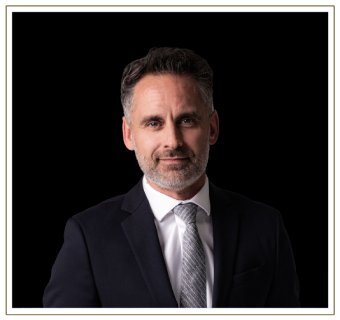
Dr. Scott Leune
Scott Leune, known as The Dental CEO, is one of the most respected voices in dental practice management. From his seminar room alone, he has helped launch over 2,000 dental startups and supported more than 20,000 dentists across practices worldwide. Named one of the 30 Most Influential People in Dentistry, Leune delivers practical, no-fluff strategies that empower dentists to lead with confidence, scale efficiently, and achieve real personal and financial success.

Kathryn Gaysinski — Founder - DeStyle Design
Kathryn Gaysinski is the Founder of DeStyle Design, a boutique interior design studio specializing exclusively in dental practices. With nearly 20 years of experience, she works with clients across Canada and the U.S. helping dental owners build timeless, spa-like spaces that reflect their brand and personality. Roughly 60% of her projects are startups, and she remains personally involved in every engagement, from mood boards and 3D renderings through to contractor-ready finish specifications. Kathryn’s approach prioritizes function, durability, and lasting design over trends to create practices that feel as good as they look.
Watch Episode
Read Full Transcript
Scott Leune: So Kathryn , like I said, thank you so much for joining us. This topic comes up a lot. I've got a lot of dentists that asked me about practice design, about material choices, about what to expect and the journey and costs and all kinds of questions. But before we dive into all of this, if you could, if someone hasn't heard about who you are yet, could you please take a few moments to explain who you are, what you do? Why is it that I asked you specifically to be on this podcast?
Kathryn Gaysinski: Thank you very much, Scott, and thank you for having me. It's a pleasure to be here. So my name is Kathryn Gaysinski and I'm the founder of DeStyle Design. We are a boutique interior design studio. We work across the board. We work in Canada and internationally, and we provide interior design services for dentists for the past 20 years.
Scott Leune: Excellent. And you say Canada and internationally, and of course you've also helped a lot of offices in the United States. I know we've got listeners all over the world, but a lot of the listeners happen to be from the United States and you still help a lot offices in US, correct?
Kathryn Gaysinski: That is absolutely right. We actually have our satellite studio located in Fort Lauderdale, and we worked in many states across the United States. We are focused in Florida, in Texas, Georgia, Northern states, New York, Pennsylvania. We have a lot of clients in Bohetics.
Scott Leune: All right. And by the way, I know most people listening to this are just hearing the audio only. We're talking about design. I wish we could have all these photos for everyone right now because I'll tell you, Kathryn's work is gorgeous. It's modern without being cold. It's the best trends, but with elegance. It's just when you think of the most beautiful, new offices and designs, you're thinking in the realm of what she and her company does. So that is who you're talking to right now, someone that does boutique design at the highest levels. Now, Kathryn, if you had to guess, I know this is maybe a question you've never been asked before, but what percent of the practices that you work with are startup practices versus existing offices that are moving or expanding?
Budgets, Post‑COVID Costs & Design Trends
Kathryn Gaysinski: So I've been thinking about that actually for our own analytics purposes. And I would say about 60% of the practices that we're working with are startups.
Scott Leune: Yeah, I would imagine the startup is kind of a practice that's a little more budget sensitive and maybe has to make design decisions that are maybe sometimes compromised by the budget versus a practice that's existing already. They're kind of building their dream, what they've always wanted to do. Is that something that you see?
Kathryn Gaysinski: Yes. We see a lot of budget being the front of discussion, certainly in recent times as costs for construction have increased drastically post- COVID specifically. And I always say that it's helpful to define the budget in terms of a $1 sign, $2 sign, $3 sign expenditure to put us in the ballpark. But within every budgetary range, there are certain decisions that we can make to maximize the impact.
Scott Leune: Now, I would love to hear from you. I've got a list of things I want to talk about actually, but the first thing on this list is what are some of the latest trends you're seeing? I don't know if that means how practices are designed or what materials are being used for flooring or lighting trends. When I ask you that question, "Hey, what's some of the latest trends?" What comes to your mind?
Kathryn Gaysinski: For me, when you say trends, what comes to mind is the vibe or the ambiance that a person walking into the space is getting, right? It's that emotional impact of design. And some of the trends that we're seeing, and it's interesting because everything obviously in our world is related, so costs may drive decisions on what type of practice to potentially acquire or what type of unit to get as you're coaching people on it. So we're usually dealing with, let's call it smaller scale spaces for the most part. And some of the recent trends really play on maximizing the impact of the space in a smaller space. So to give you an example, 20 years ago, there's been a lot of use of dark woods, mahoganies, reds, right? It created more of an English library kind of interior. Today's trends are what everybody are after because of the smaller space and to counter that impact is something that allows you to breathe, a serenity of sorts, an environment that you walk in, muted tones, beiges, indirect lighting, more of a spy aesthetic.
And I think that partially has to do with the scale of the spaces we're currently working with, but also with some innate desire of the people just take a minute and relax in our busy lives.
Scott Leune: Yeah. So maybe if I were to respond to that, in the past, construction costs were much lower than they are now, and therefore we could afford to have kind of a larger building or a larger footprint of our practice. And in combination with that, maybe the style was around the mahogany woods and so forth because our goal was to have authority in the mind of the patient. And you're walking in and I'm the best there is. And look at all my degrees and my mahogany walls and my big space. But as construction costs have gone way up, now the footprint might be a little smaller than in the past. And with that smaller footprint, we can't overload it with big, thick, heavy, darkness. And so we're going a little brighter, a little more beautiful and indirect light instead of harsh light. And maybe too, with smaller footprints, we can afford to upgrade some materials because it's a smaller footprint.
There's not so much. Did I kind of say that correctly?
Kathryn Gaysinski: Absolutely. Spot on with another just add-on as well is that the trends as such are obviously self-propelling. We see more and more of a certain thing on social media, on Pinterest, on Instagram. Now that AI is getting into the conversation, there's sort of this proliferation of a fashion of sorts. Our approach to design has always been to obviously consider trends, but what makes our work typically timeless is that we're designing around the client's personality, character, what they want to market their business as. So we take into consideration of this minimalism that is proliferating right now, but we also want to make sure that there's a story to tell for each project.
Timelessness, Material Selection & Long‑Term Cost
Scott Leune: I think you used a very important word, the word timeless, because when we talk about the wrong materials and the wrong kind of design theme, we end up having to replace those things more often. So if we go with a very trendy design theme, well, shoot, three to five years, we're going to have to buy new furniture again. Or if we go with a material choice that isn't timeless, it can't last that long, then we might have to replace it soon. So timeless gives us the ability to go much longer without having to have replacement costs while hopefully having a gorgeous design while we're at it. How does the selection of materials impact kind of long-term cost? I imagine it's kind of a cash 22. I could buy a really expensive material for my floors. It could last forever, but I may not be able to afford it now.
Or maybe I could buy something cheap I can't afford, but shoot, then I can't and I got to pay for it again later. How does that work? What's your opinion on the selection of materials versus the long-term cost?
Kathryn Gaysinski: It's a fairly loaded question, and it's an important one. Obviously, it's in the core of what we need to consider when approaching a design for a space. So I would say there's a couple of factors here. One is fit for purpose. Because practices may be located in the northern states where there is a lot of wear and tear from snow and sleet and salt to the southern states that may have increased levels of humidity that cause deterioration of certain materials, the first thing that we have to focus on is a fit of a material for purpose. So we talk to the client, we understand what their approach is or what their story is that they want to tell. We talk to them about the vibe that they want to get for the space. And this is where we pull on some of the trends to work them into the overall recipe, so to speak.
And then we examine the actual context of where we're working in. So to give you an example, materials can be higher end, that can last longer, but they can also be higher end that don't last. To give you an example, marble. So if somebody comes to me and says, "I want full out Italian marble foyer because I saw this thing on Instagram. I want it for my office." But we are in New York or in Toronto. The salt will kill the marble after three seasons because it eats away at this natural gorgeous material, so it's not a fit for purpose application. Instead, we can recommend a porcelain tile that looks like marble that is slip resistant because safety is important and that is installed in the proper way with the proper workmanship that can give that dentist operational capacity well beyond the term of their lease most likely.
So properly installed porcelain tile would last somebody 40 years. But if we were to choose marble, they would have to deal with cracks and polishing and ceiling every season. So we approach it very methodically. We figure out what the right materials are for the region, what the right materials are for the vibe, the budget, and the application, and then we put them together on a cohesive pallet that makes sense.
Practical Material Choices: Floors, Walls, Ceilings
Scott Leune: All right. So if I were to kind of step back from that, because that all makes tremendous amount of sense, but I'm wondering if we can get a little general for just a second, because a lot of dentists have never done this process before. They know what the journey's like. They don't know what kind of materials should go where. So I'm just wondering, what are some common material choices for floors, for wall finishes, for ceilings, or for plumbing fixtures? What are some common things you're now seeing that are used often and are beautiful?
Kathryn Gaysinski: Beautiful, functional, and give you the wear and tear for the floors. We'll start with that. In the cold regions where we need more protection for the floors, definitely porcelain tile. Porcelain tile differs from a ceramic tile by the fact that it's dried at a higher temperature, which makes it more robust and durable. For somebody who sees porcelain tile for the first time, it's the hard surface material that doesn't have the red core, the red inside when you're looking at the edge of it. It's either gray or matching color to the surface area. So that's porcelain. Very recommended. The proper format and orientation is something that we advise on, but certainly porcelain tile. This material can also be used for the washrooms and for areas that require more significant cleaning, so lab perhaps. For the rest of the areas, the clinical areas, the treatment corridor, we recommend luxury vinyl plank or luxury vinyl tile.
It's a synthetic material that has the printed layer sandwiched between a rubberized backer and the clear protective top coat. There's different grades of materials with different thickness of wear layer. This is the top layer that will give you the longevity for this material. The benefit of this material is the fact that it lays down very easy. You don't have to level the floor too much. It is very forgiving, softer underfoot, better with acoustics because it removes that reverberating sound in the space, and it comes in a variety of finishes and pallets. So that's what we see across the board for the floors for the most part. And again, there's many designs. For the walls, if we're talking about a restroom or a washroom that is used by the patients, a good idea would be to protect the walls around your vanity and your toilet with a tile, again, to minimize the cleaning and the wear and tear around those areas.
For the rest of the spaces, we can look at feature or accent panels that could also serve as wall protectors in areas of very heavy use. For instance, if you're dealing with a very narrow corridor and you know you're going to have a busy practice, it would be a good idea to install corner guards, but you don't have to go to Home Depot and get those ugly plastic corner guards. Those could be worked into the design with a decorative element to both protect the wall and also be beautiful. And again, wall finishes for the maximum return on investment, pick paint, but the paint needs to be of a specific sheen or finish to minimize any fingerprints, but also to be conducive to cleanability. For ceilings, in the reception area and the clinical space, if budgets allow, we recommend gypsum wallboard. So essentially a flat smooth ceiling that is a little bit more expensive to install and finish, but gives you that nice, clean, minimal look that everybody are after right now.
You can then also install some very nice light fixtures. If you choose, it creates a very kind of clean, finished, tailored look. For the back of house areas, for the clinical areas, our accommodation is a T-bar ceiling. It's those squares that you see or rectangles sometimes with a grid. Those are better in terms of accessing any utilities above the ceiling. If you need to add a light or if you need to access your TV, electrical and data, it's easy to pop up and do. They're also really good at sound absorption. So when the handpiece is going or where you're doing a procedure, sound tends to bounce in the space. So the T-bar ceilings help with absorption of that sound and they're also cheaper to install. So again, we're trying to leverage the front of house first impression against the back of house functionality while balancing costs.
Lighting Trends & Accent/Feature Walls
Scott Leune: What about kind of this newest trend when lighting to have these LED channels of light? What's going on with that right now?
Kathryn Gaysinski: So the principle is very good. The devil's in the details and how it's applied. So this type of treatment where you have this sort of layered light, where you have light coming at you from the perimeter as opposed to strictly overhead, creates this, again, this sense of repose, the idea that somebody's walking into a spot and it's wonderful. But I see folks use it indiscriminately all over the place. So there is such a thing as too much of a good thing, right? Because to give you an idea, this increases typically the cost quite a bit for workmanship because for every time you use that sort of channel light, you have to frame the wall in a specific way. It increases the labor cost, the cost for the fixture itself, because it's an additional light that doesn't serve a purely functional purpose in this space. The only one other critical place, aside from the reception area where I would recommend using it, is actually in the operatories directly above the patient where you have that indirect light reflecting off the ceiling.
And to your point, creating this sort of soft glow, this is another critical kind of point of impression and functionality.
Scott Leune: And in some practices, there's these kind of accent walls or this kind of moment in the experience where there's a design statement being made. What are some things you've seen lately on how someone's kind of building a wall of beauty or accent or something different than all the other kind of finishes that are being used in that room?
Kathryn Gaysinski: So there's a couple of things that could help define that statement piece. The first is visual contrast, right? So you can use a darker finish. It could be a paint finish, it could be a wall covering finish, it could be a tile that is at least two or three shades darker than the surrounding perimeter area that is ideally geometrically defined. So it's easy for the eye to focus on it. And again, the biggest part about good design is to know when to pull back. There is such a thing as too much of a good thing. When you have too many competing elements and you walk in, it could create more of a disoriented sense rather than something that is balanced and beautiful. So for the design to look boutique, you must clearly define those key features and let them breathe. Don't do anything else around them.
Keep it minimal, keep it secondary. So one way to do this is with color. Another way to do it is with texture. You can use either textured molded drywall, you can use vertical slats, you can use a textured porcelain decorative tile, you could use a wood panel. And the trick when you're using texture as your element of interest is to illuminate it properly. So anything that is textured, anything that is three-dimensional shows best. When there's a floodlight, it's called a grazing light that really brings out and pulls out that texture that is installed very close to the wall, kind of casting the light down. If you don't do that, in essence, it's wasted resources because it will not showcase it properly. So that's another way to go.
Scott Leune: So maybe an example of what you've just described, and correct me if I'm wrong here, but just to kind of verbally almost visualize it, is I walk in, I've got a lobby, it's got some natural light, it's got some indirect light, and the color scheme is different shades of beige on top of each other, minimalist lines, minimalist kind of furniture, but quality stuff from the aesthetics standpoint and centered on a wall is kind of the main kind of built-in booth area. And that booth area where people could sit is kind of inset into the wall a bit, or at least the walls built out around it, up all the way to the ceiling. And in that little corridor where that booth could be, that booth and the wall above it could be a couple shades darker of beige as kind of an accent. Or it could be upholstered and the booth is upholstered and the upholstery goes along the wall.
And it doesn't have to be a loud pattern, but it's a different material. And if we have a light in the ceiling shining right down from above against, alongside that material parallel, we can see the details that that is different than a wall, but that's another material. And that creates kind of very understated but elegant difference or contrast or accent. Did I describe that correctly?
Kathryn Gaysinski: Absolutely. That's perfect. I can see it in my mind's eye. That's exactly what it is. So again, being reserved in the right places is the hallmark of elegance, right? You don't want to do too much, too loud, too much of everything at the same time. It needs to be purposeful and it needs to be properly framed.
Why Use a Designer & The Design Journey
Scott Leune: So it sounds like a major set of benefits when utilizing a designer is that I am using materials that fit the function properly. So I've got an expert to help me understand what that is. I've also got someone that is understanding the fully loaded cost of these decisions. Not that the cost of a type of ceiling material, but the cost of installation and maintenance and its impact on other costs. I've also got someone that is focused on the aesthetic and comfort of the experience. Is it beautiful? Is it mature? Is it elegant? Is it understated? Does it control sound? And so those are three incredibly important dynamics that I would lose if I wasn't using someone trained and experienced in bringing that to a design. And I feel those experiences, those things I just listed are what really make a practice a wonderful place to be an employee in, to be a patient in.
It's the understated thing that subconsciously is telling me when I walk in, this is a place of quality that I can trust. So I'm curious now, I'd like to go into the journey a bit. A lot of people don't understand what the journey's like in working with a designer. So when do I talk to a designer? What's it like? What's the back and forth process like? How long are they helping me? What are they doing for me? There's a cost to this whole thing. If you could kind of give your version of a summary of what it really is like to work with a certified professional design firm in this whole project, in this whole process.
Kathryn Gaysinski: Absolutely. And this is actually something that we see as a learning curve with a lot of the clients that come to us, specifically those 60% that it's perhaps their first startup office and they have no context or have not had an opportunity to work with the designer before. So first advice, I guess I can say is do not be alarmed by our mannerisms or our hair color sometimes because at the end of the day, we're creative beings. On the other hand, do not only select your designer based on creativity. To your previous point, Scott, the idea is that we need to balance functionality, fit for purpose and execution when we deal with a successful project. And in terms of communication, this is the biggest key component. I can't overemphasize it enough as much as possible. And with recognizing that a lot of us just in the everyday world do not know how to articulate what we want from a design, it's fine.
Use whatever means you have, whether it's your Pinterest board or photos of the fire hydrant in the rain because you like the color of the reflection. Or it could be something about ourselves from a standpoint of what's our story? What do we want to communicate to our patients? How do we want to break the ice with those patients when they come see us? Give us as much information as possible in the very beginning. So when we're first touching base, it's that initial kickoff call, right? We're going to ask those questions that I just mentioned, what's the story, what's the approach? Is it a startup, et cetera. That's a very important piece. So be as all inclusive with your communication upfront as possible. This will equip us to deliver the design solution that you will love. Communication. And also the next step would be understanding the schedule and deliverables.
So typically, interior designers in this context would help finalize the vibe of the office, deliver some 3D renderings. And 3D renderings are visualizing how your space would look like with the proposed materials that we select and provide some direction or finishes specifications, which is the technical component so that your contractor will be able to price the job and then later apply all of these finishes that we picked together in the right location. So those are the key deliverables that we typically work on within this context. First meeting is a kickoff meeting. Second meeting, we will review mood boards with you. And what that means is we would put together typically two collages that give the vibe. Once we commit to one of those options, we will then apply those options to the plans that we will get from the architect to give you those renderings or those pictures of your space.
Because we all are human and communication lines can break down sometimes, we allow for up to three revisions for each of those images that we include in our context for customizing or for reworking. Sometimes if the communication lines broke down somewhere in the beginning, we may provide the first design that is not at all what you visualized. Do not be alarmed because all that means is that the moment we get the feedback on this and we have thick skin, we've heard it all, we've seen it all, give us your honest opinion and feedback. We will take that and we will rework the design until you love what you see. And we usually do it in those three iterations for each of the images that we present. After we figure out the images, it will take us some time to put the technical drawings together and then we would call our process here concluded with the caveat that if the contractor has a question or if you have a question after the fact, we're obviously available here for our clients to answer any questions.
So the overall process, if everything goes well, communication goes smoothly, should not take more than four to six weeks if decisions are not backed up on. So this is the one key component that I think it's important to emphasize. Following an approval process, if we're moving to the next steps, but you change your mind, the clock resets. So it's very important to make the decision and also to stand by this decision as we move forward because the tango dance will slow down the process. It will not get you to an executed office on time and increase everyone's level of frustration as we go along.
Scott Leune: There's a good analogy I've been thinking about as I've been listening to you. Getting a practice designed is almost like a patient wanting a new smile design in some ways. So a patient doesn't know sometimes the tiniest nuances that matter. And if they were to come to us and say, "I like this tooth right here. I like that kind of line right there and this shade right here." And what they may be coming to us with, they think is proper communication, but it doesn't actually make logistical sense in a way. What might be better for the patient is to come to us and say, "I love the way these five smiles look and feel, and I'm looking for something similar." And then we can use our expertise to start mocking up the smiles, giving 3D renderings of those smiles and getting their feedback to where we can get to the spot they want to get to that's beautiful by their eye, but also it makes sense by our clinical eye, right?
And in a similar way, if people are coming to their designer and saying, "I love this one little shade right here. I love this little thing right there. Oh, I saw this over here." Many times they can be completely disconnected and telling completely different stories and we just like them personally. I might offer the listeners some advice right now. Instead, communicate to your designer two main things, photos of what you feel represents your brand as a business, your clinical brand, and photos of facilities that you like the look of, the whole photo, not the one little corner of the one little chair, but the whole photo. And I think if you were to give a designer like Katherine, photos that represent your brand and photos that represent facilities you like, the genius of design behind Katherine and her group is going to be able to get you where you want to go pretty readily.
And then the worst thing we could do is make decisions and then go back on them. Just like a patient could say, "Oh, I love this. " And when we do a whole full wax mock up and they say, "You know what? Actually, it changed my mind. Now I want this over there." It resets the clock. And so also we need to understand that we're not the experts just like for practice design, just like a patient's not the expert in smile design, even though they can dabble in ChatGPT and create their own smile design and we can dabble and go to Home Depot and Sherwin-Williams and try to put something together, it's not going to be at the highest level. The best quality happens when our vision combines with the expertise of a quality designer when both happen there together. So that's kind of ... Now, did I say anything that you actually disagreed with it?
Did I miss the boat somewhere in that analogy?
Communication Analogy, AI Renderings & Cautions
Kathryn Gaysinski: Not at all. I just want to add one more thing. You mentioned ChatGPT and that's very on point right now in the general context of the conversation. So we've started seeing emergence of 3D renderings that our clients sometimes send to us to say, "I want this. " The challenge that I see with this is that sometimes the lamp is not attached to the ceiling and sometimes the countertop is Covering in the air without any brackets to support it. Or they have a marble slab overhead above the patient chair, which in my mind that would be alarming. So use AI with caution. We use AI in our work as well, but you need to understand that when you're using AI, it's more so for the general vibe that you're trying to relay. We will not be taking this and building this in your environment because more often than not, at least at this stage where the AI is, it's not feasible.
There's a lot of things, Scott, to your point that go in the background for us to be able to interpret a vision into a buildable functional environment.
Scott Leune: Okay. So I think if I kind of start summing up a few of the points we made here. Right now there's a budgetary component to design that's important and it has led to some new decisions and new trends. And right now, minimalist, timeless, elegant, spa-like seems to be a common theme around the more modern offices being built. And a professional designer is going to bring expertise to give you the best materials for function and a budget that makes sense with very elegant design that we could never create on our own. To help you, designer, we are going to look at examples that speak to our brand, what we stand for, images that speak to our brand, and examples of things we feel we would like to see in our practice. And then you are going to take the architect's design and you are going to start creating mood boards and lead us through that process.
Then you're going to start kind of helping select different types of finishes. And that's going to lead to 3D renderings so that our eyes, our non-expert eyes can understand what you're trying to tell us. We see it in 3D and through a series of kind of updates and tweaks, we end up with the final renderings. And from that point, you're going to go into the architectural drawings of the materials, the things that the contractor needs to know, for example, in the engineering side of design. And then that is handed off and the practice can be built to be beautiful. And when there's a question, it's going to come back to you so you can give an answer. That journey can last four to six weeks, assuming we're not the problem in the process, assuming we're not changing our mind and going back and redoing things like that.
Four to six week process. Is that correct, what I just said?
Kathryn Gaysinski: Absolutely. One more thing I would like to add on the renderings. It's an important distinction as well. Our nature is to be prone to extremes sometimes. And so the 3D renderings are very precise, but what the built environment would look like in your lighting with your geometry, with the way the materials reflect in the field will look a bit different from the actual renderings. So I want to just emphasize that and make it very clear. The renderings are for a concept. They're really good, almost misleadingly good, that you think you're going to get this exact photograph when you're standing in your space and you're looking at that picture that was provided. There will be subtle differences and subtle variations, but the overall look and feel, and we have a lot of offices completed that we can look at the rendering and the final and they'll be very, very close.
They may be 97%, but they're not going to be 100% because I know we're dealing with dentists. I just want to say it.
Scott Leune Yeah. And of course that makes sense because depending on the time of the day, the sun's hitting the windows in a different angle, which creates a different shadowing, which creates a different perceived color on the wall. And the material of the wall might look different as well. And all of that is going to be very, very similar, but never exact to kind of a fake image like a rendering. But what a great tool that is to have those renderings. I think back to my career, and I'm old enough to not have had renderings in the past. And man, it was difficult. And you kind of almost had to just accept that things didn't turn out quite like you wanted. Communication wasn't perfect. There were no renderings. It was even hard to make a decision. Do I like that color or is that slightly different color better?
It's hard without a rendering. It's such a service you provide to go through the process of creating the renderings so that we, the decision maker are more in line with what to expect. So our decision, we're going to feel better about our decisions. And man, it's a fun process too, isn't it? It's just fun to be artistic in a way with a dental practice and build what we've dreamed of having within, of course, within the limits of the budget. All right. Last couple questions here. I've never asked someone this before, but what are some of the differences, if any, that you're seeing between Canadian design and kind of facilities and laws maybe versus what you're seeing on the US side or trends different, what people want different? Are they the same? What's your response to that?
Canada vs. U.S. & Regional Cost/Style Differences
Kathryn Gaysinski: So the predominant differences that I see, and I'll touch upon the legislative part of it a little bit more. So building codes drive the bus when it comes to the layout of the space. And to give some context, for instance, barrier-free accessibility or the ADA compliance regulations or specifics may vary between Canada and the US more so it may vary between the provinces or the states that we're working with. Each state adopts its own legislation in a way or certain sections that apply to that state. Same thing with, let's say, the province of Ontario. Shielding requirements could be different as well. And to give you some practical examples, in Ontario, we may require to put lead lining in the walls around the CBCT, whereas in certain states, it's not required. Two layers of 5-8 type X gypsum wallboard would do.
Scott Leune: Yeah. Like in Texas, for example, nothing's required. You can have the CBCT in the hallway and patients walking by. No lead, no walls, no nothing. Yeah. I get it. And so of course that will impact the size and shape of the rooms. It'll impact the cost of those areas. And so you're saying that Canada and the US has differences when it comes to that, but even within the countries themselves, there's differences between the states and between the provinces. I'm curious, are there big differences in style or in budget?
Kathryn Gaysinski: In budget, yes. What's interesting or what we see in budget is, and I actually hear I would group probably Canada and the northern states in one group versus the southern states just in terms of labor costs. So if we're talking about materials, et cetera, and I'm leaving aside the conversion to the Canadian dollar or the US dollar, the northern states typically have much more stringent labor laws. Some of them would have unions, a lot of unionized work that is required depending on the area that you're in, and that would drive the labor cost up significantly. So if we're looking at the RSMeans database, for instance, there could be almost like a 20%, a 30% delta to the national average to build an office that is in the northern states relative to, let's say, Florida. So there's definitely a lot of that happening, and that drives the style.
Again, so back to our discussion, northern states as well, the style may be a little bit more robust, a little bit more textured, heavier-handed sometimes, and it relates to the natural environment. And countries that have winter for seven months of the year, you don't necessarily want to go with all sleek floors and all glass transparent elements because it makes you feel cold, right? But that would work really well in Miami, let's say. So there's definitely regional differences, and that's impacted by the architecture, how they build the buildings, what happens around you, the weather, is it a city or a rural area that's urban versus rural? That's also very important. But overall, I think the social media and the internet made it all very global. So generally speaking, the same trends as appropriate for area would be available to everybody. So I would say it's more so regionally labor cost driven and again, based on the climate that you're dealing with.
Scott Leune: I mean, I shouldn't get too political here, but my gosh, I'm in Texas and in Texas, we are a state that doesn't have a lot of those extra regulations that northern states might have. And what I'm hearing you say is if you're in a state that's requiring you to use union labor, the way they hit the hammer is the same as someone that isn't part of a union, but you have to pay 30% more because they are part of a union. In a backwards way, that's the state taxing the dentist to supplement the income of people beyond what capitalism would do. And it's a very interesting thing that when you're in a northern state like that, you've got to understand that these normal budgetary numbers you see, these normal averages you see may not apply to you because whether you agree with unionization or not, you're going to be the one stuck with the 30% increase in costs because you're located there.
And there's all kinds of things like that, this across all the states, but in the United States in general, the more Democrat, the state votes in general, the more regulations there may be or the higher the cost there's going to be to build and operate a practice. Compared to states like, for example, Texas with voted heavily Republican, typically those kinds of states have less regulations and therefore less costs. And I'm not even American citizen. I can't even vote. So I'm not even saying, oh, good or bad for Republican or Democrat, but that's just the reality of it. If it's going to cost you $200,000 extra, you want to know. You want to know to expect that. And I'm curious, in working with DeStyle design, your firm, I would imagine you've got a lot of insight into costs, not just material costs, but what to expect from contractors or from subcontractors for labor in different areas.
So not only are you a resource to help me build something that's functional and beautiful, but I can also lean on you when I'm looking at bids, when I'm looking at materials and things, and I need an understanding what really all in is this going to kind of cost me. Is that a correct statement to say?
Kathryn Gaysinski: Absolutely. And we're comparing notes with the architecture team all day long about this and sort of commiserating sometimes, right? Because yes, we definitely track finishes and labor costs on our end as it pertains to interior design and obviously comparing that to the architectural construction costs as well. There's a big difference. And my only slight comment as I kind of dipped the toe in this and got further into the analytics and understanding of cost trends is my biggest complaint would be that for lending purposes, the averages are sort of national, but for physical construction cost purposes, they're very localized and the two sometimes don't really jive.
What Interior Design Services Cost
Scott Leune: Yeah. There can be huge gaps. You're getting a standard loan from a bank for a startup practice, but in your area, it ain't enough money because labor costs are through the roof. Yeah, that can happen. In thinking about this, by bringing you into the project, I've got a watchdog to make sure I'm guarded from increased costs. I've also got an artist to make sure that what we're going to do is also beautiful. And I've got an expert to make sure that my material choices make sense for what we're trying to do functionally. And I can imagine building something without a watchdog on the budget, without an artist for the beauty and without an expert for functionality. And so to me, this is one of the blind areas in dentistry that is, I'm almost embarrassed that most dental practices are built without the expertise of a proper interior designer.
It's an embarrassing thing to admit because it makes no logical sense to not have that. Before we conclude here, and I don't mean to put you on the spot, I don't want you to name a specific number if you don't want to, but just to give people an idea of what interior design kind of costs, is there a ratio? Is there numbers or like a range? What can I expect to invest in interior design realizing it's going to save me a bunch of money, right? It's going to save me money. I'm going to get that money back. But just to kind of get me kind of leveled on par with what to expect, what might this category cost me?
Kathryn Gaysinski: So interior design fees are calculated in different ways. It all depends on our scale and involvement in the project. So for instance, if we're just providing the mood boards, the couple of revisions on the 3D visualization and the simplistic kind of finishes package and the practices within a normal startup realm of 1,500 to 2,000 square feet, we can talk about a package that is $6,500 US. If we're getting into more involvement with bid analysis, consulting, doing a little bit more in terms of coordination and more detailed drawing work, so a full interior design package, again, for the similar type of practice, it could be 17,000, $18,000. That's the range for a startup practice. Everything else that we budget is also predicated on square footage. So for instance, if we're doing a practice that is, as I said, 2,000, 2,500 square feet, the cost will be less obviously than if we're working on a practice that is 5,000 square feet.
And the way we budget that is based on scope of work, square footage, and a multiplier per square foot.
Scott Leune: So if I do the math here, between one half of 1% and one and a half percent of the entire project cost gives me this expertise to make sure I don't waste money, I don't build something ugly and I don't build something with the wrong materials, I don't lose. It costs one half of 1% to 1.5%, which is a tiny amount considering what we're building and the fact that this thing's going to live for decades to provide for not just us financially, but provide for experience for the patient, provide experience for the people that work there. So what a wonderful investment, what a small number and what a huge value, in my opinion, for what we're doing here. Excellent. Well, we've got to wrap this up. Kathryn, if someone wanted to talk to you or your company, DeStyle Design specifically about doing a project in US, Canada or in other countries, what's the best way for them to get ahold of you or learn about you?
How to Work with DeStyle
Kathryn Gaysinski: Absolutely. So our website, our Instagram, our website is triplewdstyledesign.com, Instagram_destyledesign, and everyone can always reach out in the contact us form on our website at the very bottom of the page. There is an online questionnaire that folks you can fill out if you'd like to let us know a little bit about yourself and our representative will reach out to you to set up a kickoff intro call either with myself or one of our team members to be able to get you going.
Scott Leune: And how often are you personally involved in a project when your company is hired?
Kathryn Gaysinski: Always in some capacity, which means I may not be the lead on the project, but we're small enough for me personally to be involved or at least to know what has been done on every project. I have a look at the renderings, I glance at the material selections, I talk to my team about the intro call, mood boards, et cetera, and I'm sporadically attending calls as well. So you can expect to either have the call directly with myself or have me pop up on one of the follow-up calls just to say hello and to have any questions answered. Also, if there's any questions, comments, or concerns about the process, you can always reach out to me directly as well throughout the process as it goes along.
Scott Leune: Yeah, that is awesome because we're in a day and age today where it's difficult to ... You hire a company and you think you're getting a certain amount of expertise only to realize like, no, that doesn't exist at all. I'm getting some junior assistant pushing papers and that's my service. And so it's wonderful to run into companies where the founder is actively involved in all the client work. So that's wonderful that you do that. Okay. Well, let's wrap this up. So Kathryn Gaysinski, thank you so much from DeStyle Design for joining me and answering these questions. I hope this was a great update for people on where we're at right now, what to expect specifically when it comes to the interior design of a new space, whether that's a startup or an existing practice. I want to thank everyone for listening to this podcast. You may not be aware, but we are now ranked in the top 5% worldwide of all podcasts, which is crazy because we're just a little dental podcast, right?
And we are in most weeks number one in the world for all dental. So that's just been an awesome thing. I want to thank all of you guys for subscribing, for listening, and I hope this weekly drip of content into your feed brings you value and helps you navigate your career from a business perspective. So again, thank you, Kathryn, for joining us. Is there any last thing you want to say before we wrap this up?
Kathryn Gaysinski: No, I just want to say thank you so much. It's been a pleasure. I think the discussion was very productive and I look forward to getting in touch with anyone who needs design services.
Scott Leune: Awesome. All right. Well, thank you everyone. My name is Scott Leune, and this was the Dental CEO Podcast.

SUBSCRIBE TODAY
Subscribe now and receive a 25% discount code for Scott Leune’s upcoming events. Plus, get podcast episode alerts and exclusive subscriber perks.