
Dental CEO Podcast Episode 68: Don’t Take Startup Advice from a Lucky Dentist
In this episode of The Dental CEO Podcast, host Scott Leune sits down with Kent Miller, founder of Dentagraphics, to push back on a dangerous piece of advice circulating in the dental world: that you can open a successful startup without good demographics. Using the story of one “lucky” dentist who beat the odds in a poor market, Scott and Kent explain why luck is not a strategy and why the right location data is the single biggest factor in de-risking a startup or a practice move. Together, they break down the science behind choosing where to open, how to match a market to the kind of dentistry you actually want to do, and how to avoid the costly mistakes dentists make when they pick a building before they understand the patients around it.
Highlights
- Why “demographics don’t matter” is reckless advice, and how to tell the difference between a repeatable strategy and a lucky outcome
- The core demographic factors that determine a market’s potential, including population size, income, education, age, and the ratio of residents to competing practices
- How to tailor location criteria to your specific vision, whether you want to focus on implants, cosmetic, pediatric, or endodontics, since the ideal market changes with the dentistry you plan to do
- How to evaluate a practice relocation by mapping your existing patients and drive times, so you know which directions are low risk and how far is too far before you lose patients
- Why the “if it’s good enough for Starbucks, it’s good enough for me” assumption falls apart in dentistry, and what current trends in DSO and private practice activity signal about where the market is heading
Speakers
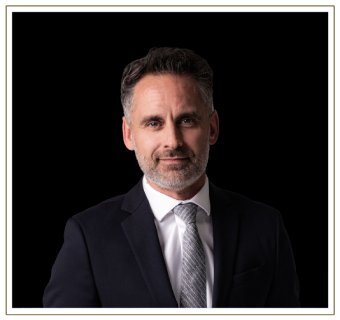
Dr. Scott Leune
Scott Leune, known as The Dental CEO, is one of the most respected voices in dental practice management. From his seminar room alone, he has helped launch over 2,000 dental startups and supported more than 20,000 dentists across practices worldwide. Named one of the 30 Most Influential People in Dentistry, Leune delivers practical, no-fluff strategies that empower dentists to lead with confidence, scale efficiently, and achieve real personal and financial success.

Kent Miller — President - Dentagraphics
Kent Miller is the founder of Dentagraphics, a demographic analysis firm he launched roughly 12 years ago to help dental professionals identify and evaluate practice locations. His background is in urban planning, where he worked with cities and organizations to determine optimal business placement in commercial corridors. Today, Dentagraphics serves startup dentists, established practice owners, and DSOs, providing detailed supply-and-demand analysis that helps clients find markets aligned with their clinical focus, whether that’s general dentistry, implants, cosmetics, pediatrics, or endodontics.
Watch Episode
Read Full Transcript
Scott Leune: Have you thought about moving your practice to a new location? Well, do you know that if you don't plot every single address of that patient, run the demographics, run the drive times, you might move into location where you lose a ton of patients? Or have you thought about opening a startup? But not just any startup, you like implants, you like ortho and you want to bring in an endodontist, your spouse. Do you realize that there is a very specific demographic recipe that will show you exactly where to go to optimize the chances that you are successful with those implants with the endo, with that kind of practice?
There is a way to do this. There's technology to make this clear. It's a recipe and this is something we have to know how to use. We have to master it. Do not build it and expect them to come. Look at the demographics, understand the science, understand the fact, and then build it with low risk, with high success. That's exactly what we're going to explain on today's episode of the Dental CEO Podcast.
All right, Kent, so thank you again for joining us. I was actually excited to have you on because I get a lot of questions about demographics, especially in the startup space and also get other questions about DSOs and AI and specialty. And so I want to dive into all of that in this episode. But before I do that, could you please tell the listeners and viewers who you are, what you do?
Guest Information: Kent Miller and Dentagraphics
Kent Miller: Yeah, Scott, thanks for having me on. Always a pleasure. My background, for those of you who don't know me, I founded Dentagraphics about 12, 13 years ago now and my personal background is in urban planning. So what I used to do before demographics was I would work with cities and local organizations to try to figure out what types of businesses could open in commercial corridors that had lots of vacancies. So we would look at the space, we would talk to residents, we would get our hands on any kind of economic data that we could. And then at the end of the day, we would say, "Residents really want a hardware store here and here's a space that has roughly the square footage for a hardware store. Maybe that might make sense and the city should try and encourage somebody to open that type of business in that neighborhood or a grocery store or whatever." I had some friends in the dental industry who had identified that, "Hey, there's a need for this for a higher quality product." There were some people out there doing a little bit of what we do, but essentially we put our heads together and obviously heard some of your expertise as well to help influence how we might shape that product and now here we are 12, 13 years later.
Scott Leune: Awesome. And so for people that don't know, Dentagraphics is a company that gets a lot of really cool data, demographic data to help dentists understand in part what part of the city might need another practice. That's one main point of using Dentagraphics. And when you look at a Dentagraphics report, you see two main things. You see a whole long list of very important data and then you see a map that has all of these circles on it. They're overlapping circles. And a lot of that was based in part on my early wave of analyzing demographics by hand with the overlapping circles and so forth. So what I want to do before we dive into the circles and the data, what's important, all that, I want to address a comment. A dental influencer recently released an episode where this person basically claimed that they were able to open a startup practice and had success and the demographics were really, really bad, really low population dentist ratio.
And they were basically making the case that you two can open a successful practice without having good demographics. That was basically what was being said. And I find that to be very irresponsible to say. What are your thoughts on that? You running a demographic company where DSOs and private dentists are alike are trying to use your information to find these kind of sweet spots to open a practice where the patients need a dentist. And then you hear someone say, "Demographics don't really matter. You can be successful no matter what." What's your response to that?
Why "Lucky" Demographic Stories Are Dangerous
Kent Miller: Yeah, I think you used the word irresponsible, and I think that's a great way to describe that mindset. So can you be successful? Sure. And I think the doctor that they were interviewing on that particular episode obviously was successful and I'm happy for him. I don't wish him to not do well just because he didn't engage with us or something like that. But I think for the broader set of practice owners, it's irresponsible. So could you not have life insurance? Sure, you could and you might get away with it and be lucky and you didn't spend that money over the years, but is it really the best way to mitigate your risk? Probably not. So what we look for for our clients, most of which I actually did not hear mention that ensures that they are going to the right market. One is that there's a market for care.
We want to make sure there are patients there. We want to make sure that it's the right market for that client and their particular vision and that really wasn't brought up. And then of course we also want to account for factors like competition and growth that help us ensure that, okay, among the potential candidates for you and your lifestyle, we chose the best one.
Scott Leune: So what you're kind of putting in dental terms, what you're saying is if a dentist wants to go into a spot, we want to make sure that spot has the types of patients that need the type of dentistry that that dentist wants to do and that there's not too many other dentists like them trying to grab the same patient base. And in essence, the result of that is you can open a practice and you can have the patients you want doing the dentistry you want to do in a reasonably easy manner because the need is just floating around waiting for you to open a practice. That's what we're trying to find. And so this particular episode that was released, it's kind of like anyone could be lucky. The analogy I like to use in the seminar sometimes is like even a blind man could step up to the plate, swing the bat and hit a home run.
That doesn't mean that because the blind man did it once, we should all blindfold ourselves when we go up to the plate. And so I just cannot stand it when people irresponsibly use luck and pretend like it's fact, use luck and pretend like it applies to everyone. Of course, if we go into a location with horrible demographics, we could have other strengths that might make it successful for us. We could be amazing at case exception. We could be amazing at diagnosis, amazing in marketing, amazing at phones, have an amazing team, collect amazingly well, run an amazing organization and maybe we could do really well on hardly any patient flow and we can create our own success even in an area that had challenging demographics. But that person that's amazing at so many things is not a normal person and should not give normal people advice on demographics.
So I just hate the fact that happened. Thank you for responding to that. And honestly, when people say things like that, that's a kind of a red flag of listening to their advice. So now let's talk about, okay, so you talked about we want to find a location that has the patient base that represents the kind of dentistry we want to do. So what are some of the demographic factors that you guys are looking at? If we kind of start real basic, you've got a circle on a map and you pull demographics inside that circle. It might be like a two or three mile radius circle, right? What are you looking at? What's important to look at?
Core Demographic Factors: Supply, Demand, and Vision Fit
Kent Miller: Yeah, so conceptually we can boil it down to supply and demand and then a fit with your vision and your target patient base. So under the demand equation that I'll start with, we're looking at factors like the total population size. So if every circle has a two mile radius and in one two mile radius, we have 10,000 people, but in the other one we have 100,000 people, there are a lot more potential patients in that second circle. We're also going to look at factors here like income, education, the age of the population and that's going to tell us about factors like need for care. If we have lots of young professionals, they might have the income and the education, but not as much need actually to have anything beyond hygiene. That's also going to tell us about treatment acceptance rates. Can people afford care? Do they value it?
So we're looking at demand both in an aggregate perspective as well as on a per capita basis. And a lot of times I think people focus on per capita. They see income is really good over here, but what they maybe are neglecting is it's young professionals or it's like a pretty rural area and there's only 3,000 people in the whole market. Opposite demand for care. We have supply. How many competing practices are in that area? How many competing practices are there relative to the population? And then also who are those competing practices? If we're in a market like Texas, we see that there are a lot of practices who are relatively new. They're doing lots of marketing, they've got great modern websites and they've got kind of all the modern systems in place. But if we go to an area like New England or the Upper Midwest where I'm originally from, we find that it's maybe doctors who are only open a few days a week and they don't have a website and they don't have very many reviews.
So they're not necessarily the same type of practice to compete against. Lastly, what type of practice do you want? We're going to be looking here at a lot of factors actually that overlap on the demand side of the equation. So you'll have heard some of these before, but again, the income of the population, education, the age of the population, and that's going to affect the type of dentistry that people need in the area. So if you, for example, want to place a lot of implants, you're not going to probably be looking for a lot of people in their 20s and 30s necessarily because usually it's kind of like upper teenagers, low 20s. And in fact, those people usually are looking for large cases closer to where they grew up. So actually seeing those lots of 18 and 19 year olds in San Marcos, Texas is not necessarily super helpful.
And then maybe we're looking for a lot of people kind of like 45 and 50 plus and if we have lots of people in their 30s, could be a great market for somebody else, but maybe not the best market for you.
Matching Practice Models to Demographic "Recipes"
Scott Leune: So on an extreme side, if we just avoid for a second a general family practice that sees everyone, does everything, right? But if we say, "Okay, I really want to base the foundation of my practice on implants." And you're saying, "Okay, well then we're going to need to add to our consideration. Are people old enough to need implants at a high level? Do they have the income to afford implants at a high level?" Or the opposite of that might be, I'm a pediatric dentist that wants to take Medicaid. Okay. Well, is the population young enough to need a pediatric dentist and is the income level low enough that there's a substantial Medicaid presence? Or I might be a practice that says, "I want to do a lot of cosmetic dentistry." Okay. Well, do we have high enough education level for people that commonly seek out cosmetic dentistry and that may be young professionals or may not be.
And is there enough income to be able to afford a lot of cosmetic dentistry? So you're kind of like adding some flavors here to make this thing taste the way we need to make it taste for our practice. Did I say that correctly?
Kent Miller: Yeah, you did very well. And to continue your cooking metaphor, these flavors and these ingredients can interact with each other. So if we have a median household income of $100,000 a year and the average household size is three, that's about 30, $35,000 per person per year. But if we have a median household income of $100,000 and the average household size is on, that's a totally different audience and disposable income the way that that audience is going to go about their lives is going to be totally different.
Custom Weighting & Regional Nuance in Demographic Formulas
Scott Leune: So what I love about the tool you guys have is you've got kind of this ability to take these demographic factors and put importance on each one. So I could say income and age is really important for my desired implant practice, whereas maybe some other things aren't so important. And so you can put relative importance on each thing, almost like a slider, right? I want this one to be really high because it's super important to me. This one can be lower. And then your technology will change what it shows, change in essence what it's recommending based on your custom kind of moving of these sliders or these factors. Could you kind of walk through that a little bit for us?
Kent Miller: Yeah. We will provide our clients with a recommended formula. They tell us where they want to look. So I live in Carmel, Indiana, for example, and I'm willing to drive 30 minutes each way to work. So show me where I can drive within 30 minutes. And in some areas, maybe it's 20 miles to the west, but it's only 10 miles to the east because that's just sort of how the highways are laid out and maybe not Indiana, but maybe there's mountains or something that cut us off from going in that other direction. And we then take that larger market, we break it down into its smaller submarkets, which will compare against each other in terms of 10 total inputs. So looking at factors like the ratio of residents per competing practice, looking at income, growth, education, age, a lot of what we talked about there with the supply and demand and target patient-based conversation.
We asked our client, "What type of dentistry do you want to practice? What's your vision for this practice?" Not just necessarily next year, don't think about this the way that you're thinking about an associateship, but think about this long term. What do you want to be doing five years from now, 10 plus years from now? And I want to make sure that you're enabled to practice that type of dentistry. Once you know that, "Hey, I'm able to pay my bills and I'm getting through my needs. Now, what are the benefits of owning my own practice?" So we will then say, "Okay, doctor, for your specific scenario, you're in Carmel, Indiana and you want a cosmetic dental practice. We are probably going to place a little bit more weighting on income and education. We're probably going to look for a slightly older audience. Maybe we care actually a little bit less about competition, especially if you're competent in your ability to differentiate yourself from other practices than we might for somebody who says, Hey, I want to practice just bread and butter dentistry and anyone could be my target patient.
Now, one thing that I'd like to emphasize too is that this formula can differ even from region to region for the exact same practice strategy. So say that doctor in Carmel, Indiana says, "I don't speak Spanish and it's not really a big part of my patient base." That's fine. We probably won't have to really account for that. But if you go down to South Texas or San Antonio and say, "I don't speak Spanish," now we might actually want to limit a little bit more which markets we would consider because areas that have huge percentage of Spanish speakers are probably not going to be the best fit for us. So we will place more weighting on a variable like that in different regions.
"Fishing Pond" Analogy & Market Area Sizes
Scott Leune: Maybe another analogy to use, and I have an analogy problem. I overuse analogies, but I can't help myself. If I'm wanting to fish for a certain kind of fish, it kind of reminds me of like, well, I can pick a pond to fish that naturally has a lot of those types of fish where it's easier for me to just catch them with regular fishing. I don't have to be an amazing fisherman. I don't have to have a whole lot of poles at once, spend a lot of money on bay. I just do a just regular amount of fishing and I catch the fish I was looking for. But if I don't know what's in the pond, if I just blindly go into some pretty pond because I think it's pretty and it's near where I live and I'm just like, "I hope there's fish there and I hope they're the fish I like and I cast a line out, I may have a hard time catching the fish I want or at least enough of them." And that's in essence what a lot of people do in dentistry is without the data they just go to their area, their pond of patients without really knowing how many of the great patients are in there and they kind of cast their marketing line out and they may or may not catch the patients they need or want.
They can counteract that with a lot more marketing and a lot better marketing and they can counteract that with better case acceptance, but it's so much easier. If the pond is just full of the fish that you want to catch, and so you're bringing visibility to that. Now, these circles that you have on the map, sometimes I see the maps, they have smaller circles, smaller areas. Sometimes the circles are a little bigger. Could you explain to the audience why you might be analyzing things at a two-mile radius circle versus a five-mile radius?
Kent Miller: Yeah, and this is super important. So a lot of times somebody will call me and say, "The median household income in my area is $75,000 a year, or there are 2,000 residents per competing practice. Is that good or that bad?" And my question there is, what scale of analysis are we looking at? Because no matter how we talk about an area, we need to first define that area. So I want to make sure it's a good fit. It's a good picture of your geographic market footprint. In New York City, people walk to the dentist. So we're going to look at a quarter mile radius, a half a mile radius, relevant scales of analysis. If I draw a five mile radius in Manhattan, it's going to cross over the Hudson River into New Jersey. It's going to cross over the East River into Queens and Brooklyn, and it's not going to be a very good picture at all of what that market looks like.
Now in West Texas, people drive 30 miles, 50 miles, no big deal. And so there we're going to look at much larger scales of analysis. In most of the country, we're typically looking between two and five miles for a good picture of a market, but I always recommend looking at multiple scales of analysis because if I draw that three mile radius, well, what that doesn't tell me is how many practices are 3.1 miles away? What if there are another 20 practices 3.1 miles away? And sometimes there are. There's a professional building there with a bunch of practices in it and I just missed it. So we always recommend looking at a couple of different scales. Usually we actually default to radii over drive times, but drive times can be a good picture of your market, especially if you're next to mountains or a river or something that's sort of hard to cross.
I gave that Manhattan example a minute ago and that can sometimes present a better picture.
Markets vs. Properties: Combining Demographics, Real Estate, and Budget
Scott Leune: So in other words, these circles represent the typical size of area that can feed a dentist many times. So if that patient base is used to traveling two miles to go to a dentist, then in essence, a two mile radius represents a circle large enough for one patient population. Is it enough patients for the dentists that are already there or not is another question. I kind of want to step back a bit. While these circles and this data is very detailed and almost like exacting, it doesn't necessarily represent the final answer. In other words, if I've got a circle that's a two-mile radius, there may or may not be a property at the center of that circle that's available. So really these circles are making us look in the right general areas and then we'll have a bunch of properties and we may narrow it down to the last final four properties, but correct me if I'm wrong, those properties are going to be in different parts of a circle and we would want to get the data rerun just for those four addresses.
Would that be a safe thing to say?
Kent Miller: Yeah, that's exactly right. And what we tell our clients who are at this very beginning stage is that I'm going to recommend for you your top two or maybe three submarkets to focus in depending on how large of an area you looked in and what the results were and all of that. Two, three, maybe four. And then I want you to go find specific properties within those submarkets. I don't want you. I only work on the market side, remember. I don't want you to go to an A-rated market where there's good demand for care and not much competition. If it means you're going to get an F rated property where there's no visibility, there's no parking, the layout's really awkward and for some reason that property is expensive. I would much rather you go to a B rated market to get an A rated property as an alternative, but we're only going to have that comprehensive view of it if we're looking at both the market side and the real estate side at the same time.
And that's where a lot of times somebody like yourself can come in and really help out because myself, I'm saying, "Hey, here are the best markets." Then you've got the person on the real estate side saying, "These are the best properties." And somebody like Scott can come in and say, "Okay, but here's the best combination of the two."
Scott Leune: Yeah. And unfortunately on the real estate side, the real estate side, they're incentivized to show you as many properties as possible whether or not they're in the right zones that need a dentist because for them they just need to get a deal done and that can create a lot of distraction that influences a dentist sometimes to go in the wrong spot. On the flip side, if all they did is look at demographics and ignored the property side, they may end up in a really bad property. It may be in the right zone, but it is not conducive to be a successful launch of a startup. I've got a startup coaching program where we're helping dentists for a year and a half go through all the process of opening practices. And this piece of the coaching program is one of the pieces that I personally analyze for every single person I coach.
I personally go in, look at the demographics from you guys, look at the properties from the real estate, look at the budget. That's another big budget, we can add that as a variable. You might have a great property in the perfect location that is just not affordable for the startup budget. And if you were to sign that, you would blow your budget and cripple the process of building. You'd either never get it open or you'd get it open with no working capital and it would be a disaster. So there's a lot of factors that go into it. When we see a lot of data like this, we have to analyze a lot of data. Some people are like, "Well, I just have ChatGPT do everything for me. I can just ask ChatGPT, show me a great spot to open a startup practice." What's your response to that kind of comment?
Why Generic AI (e.g., ChatGPT) Can't Replace Specialized Demographic Tools
Kent Miller: Yeah, so a couple of things. One, in my experience, ChatGPT tells me I'm right every time. Every time my wife and I disagree on something, I'm always right. And so we've seen that experience where ChatGPT has that tendency to always tell you, yes, that's a great idea. Secondly, ChatGPT does not have the same type of data that we have where we can compare to every existing practice in the entire country. And we can tell you, "Hey, doctor, this location is in the 85th percentile in terms of residents per competing practice in the country, but you're in California. And so in California, it's in the 95th percentile. And not only are you in California, you're in Southern California, you're in Orange County, one of the most competitive areas in the entire country. And in Orange County, this is in the 99th percentile of practices. So while some doctors might see 85th percentile, that's actually a pretty good number to be looking at in terms of a ratio of residents per competing practice relative to others.
But some people might say, no, I want 90 if I want 95th at least. When we have that local context that, look, doctor, in Orange County, there's nothing that's going to be in the 99th percentile. So do you want to move? And for a lot of people, obviously they've got family and friends and their life there in Orange County or wherever it is. And the answer to that question is no, so this is as good as we're going to get. ChatGPT does not have that type of data that we've generated through years and years of building this platform and expertise in the dental industry.
Scott Leune: AI always gives you an answer and the answer always seems true, but it isn't. It isn't. So some things AI has been trained heavily on with a huge data set and they have both clean data and they know the proper analysis to get it. And like in dentistry, companies have spent tens of millions of dollars, if not more, to train AI to read dental x-rays. But just because AI can read dental x-ray, it doesn't mean AI can tell you where to open the next restaurant or open the next dental office. It hasn't been trained for that and it doesn't have the right data and it doesn't have the right analysis. But if you ask the question, it'll come back with an answer that sounds like it knows what it's saying, but it's not. We're nowhere near that. And on top of that, it's going to take a lot.
I don't think it'll be financially viable for AI to go there anytime soon because there's also so many different models of dentistry. What an Aspen wants in a set of demographics is different than what a Pacific wants. It's different than what one of my startups want and that's different than what an endodontist wants or a pediatric dentist that wants Medicaid or the pediatric that doesn't, or the pediatric dentist that does sleep dentistry. They're all such different models that we're not to the point where AI is the brain to come up with the answer. And I don't know if we'll be there anytime soon because it would take a ton of cost to get AI to that and there's not a lot of reward for that cost. Okay. So then when I say these things like pediatric dentist versus endodontist, how would an endodontist or pediatric dentist kind of utilize Dentagraphics to try to understand where to put a practice?
Because in endo, there's patient demand for root canals, but there's also dentists referring patients to endodontists. So in some way, I could be in an area with a ton of dentists and that might be good for an endodontist, or maybe it's bad. Maybe it's a ton of dentist means that they're doing all the root canals. How would I think about that as an endodontist? Because it gets a little complicated now.
Specialty Use Cases: Pediatric Dentistry & Endodontics
Kent Miller: Yeah. So we customize what we're looking for, of course, based off of your vision and type of practice you want, but even the level above that, your specialty. So add the pediatric dentist at the median age is 58, probably not going to be good for you. There are no pediatric dentists, as I recall last time I looked in the villages, Florida, despite it being home to 80,000 people or 100,000 people because the median age is like 70 years old. For a pediatric dentist, for example, we look at kids typically just age zero to 11. A lot of those older kids we see one have already transitioned to a family dentist. Two, sometimes we find that in communities where families are a little bit older, if we look at everyone age zero to 17, we might find mom and dad are in their 40s and 50s and the kids are in high school and you're a pediatric dentist wondering, "Hey, why isn't anybody coming into my practice?" Well, we found out that most of those zero to 17 unfortunately are 14, 15 plus already going to their family dentist.
As an endodontist, we're looking for GPs typically as a, if you're a referral-based practice strategy with which most of our endos are, we're looking for GPs as a positive. Now we do look to figure out, does that practice have an endodontist on staff? So is it an Aspen Dental that has three GPs and an endodontist? We're going to say, "You know what? That's actually kind of competition for you, not for referrals, but that endodontist is probably not sitting there twiddling their thumbs, right? They're meeting some of that market's demand for care. So we're going to view them as competition and we're not going to view that general side of the practice as a potential referral source.
The Cost of Ignoring Demographics & Emerging Market Trends
Scott Leune: If I open a practice without demographics, without understanding what my target patient type is, without this data, if I'm that blind man at the plate, I'm going to strike out a lot and it's amazing to me how it's been normalized in dentistry to not look for the truth. It's been a normal thing for people just like, "Well, there's this neighborhood that I want to live in. I want my kids to go to school there and there's this building over here and I called the landlord and it's got windows. I have windows in my ops and I think I should open a startup there and I'm just going to make it work because this episode I heard said just build it and they'll come. Demographics aren't that important." And what a reckless irresponsible way to try to build a company and to build your family's financial future.
It's just amazing to me that that is still being normalized. So if instead I could use you guys and I can go use a coach and a real estate agent and together we could see properties available, we can see a demographic analysis based on my patient type and I can understand how to build and how to ultimately capture that patient type. I can open with a bang with very little risk. And I'm seeing dentists open startups and they're achieving two million collections with a million take home pay, 50% overhead when they pick the right market and the right real estate strategy and they run the right systems after they open and that is life changing. I'm curious, you have private dentists hire you, you have DSOs hire you. What are some trends that you're seeing? Are you seeing more DSOs or less DSOs? Are you seeing more private dentists or less private dentists?
Because in essence, this is almost like a sign of what's happening in the market. So what are you seeing?
Kent Miller: So we have seen relative growth among our small practice owners. So aspiring practice owners is what we call somebody who's that associate right now that's thinking about jumping into practice ownership. I would say that we've seen a little bit less activity in the DSO space. That market has obviously seen some challenges over the last couple of years. Not to say that it's not active at all, but things have quieted down a little bit there. We have also seen an increase in activity among pediatric dentists and orthodontists doing their research. To your point, is that a sign of a larger number of practices opening here within those two specialties in the coming 12, 18, 24 months? It may be.
Demographics as Risk Mitigation for Dental Startups & Relocations
Scott Leune: Yeah. And you've actually described trends in dentistry in general. There's been a pullback in DSO expansions, even shutting down locations and merging patient bases because of the financial pressures they have. But the private market, the private dentists haven't slowed down so much and there has been an uptick in Pedo Ortho, especially the combo of Pedo and Ortho in dentistry and their success as well as just in generally in the valuations they're getting from the business side, that is definitely kind of an area of growth in dentistry. Well, I really thank you for diving into the details of this. My hope with this episode was that a dentist who had never kind of thought through this by the end of this episode would realize it would be reckless to try to pick a location without the science behind demographics. And that when you bring in the science of demographics, you are de-risking from failure and you are pushing up potentially how fast you could be successful.
Because in one way, strong demographics speeds up your success. It gets you past the months of losing money and it can bring you to a higher level. We want to de-risk this investment of building a practice while increasing how fast we get to profitability and demographics is one of the major factors in doing that. Any dentist that has other strengths will likely do even better with strong demographics. But if you don't have strong demographics, if you don't have other strengths, you're dead in the water. You could be. So I think that's really important to understand demographics or the foundation of picking the right location. I'm curious, before we end here, I do have one last kind of set of questions. We've talked a lot about the assumption that we're doing a startup. Do you find that you're working with doctors that are moving their practice?
The doctors that have a current location, they want to move it to expand it. Are they also looking at demographics as a way to decide should they move east or should they move west?
Patient Mapping & Relocation Risk Analysis
Kent Miller: Yeah. So we've mostly talked about one of our specific reports, our area analysis report on this call so far, but we do have another tool that offers the ability to see your patients down to the address level and then calculate, okay, when I go to this new address that's a mile to the north or three miles to the south, how many of my patients are still going to be inside of say a 10 or a 15-minute drive time of that location? So you can calculate exactly what risk you run by relocating if you're not relocating in super, super close proximity.
Scott Leune: So in other words, if we move a considerable distance, not huge, but I mean, it's significant. We may lose a portion of our patients because it's just far away enough the convenience factor has gone down and we've maybe lost those families. And so what we need to do is we need to give you the data and say, "Plot out my patient base so I can understand what directions are low risk to move, what directions are high risk?" Or maybe how far is too far if I go west, how far is too far if I go east? And then I might have this kind of interesting shape on the map that I then give my real estate agent and say, "Go find me the properties inside of this low risk shape." Did I say that correctly?
Kent Miller: Yeah, you said it great. And maybe I'm right off of the highway right now, but I'm looking at a location that's a mile or two away, but it's not off of a highway. And because I'm so close to the highway right now, I'm getting patients from all over town. People are driving 10, 15 miles to come to my practice because they love me and my practice and something I'm doing there. But now if I'm going to make them drive another 10 minutes because to get that two miles, you got to turn a couple times, sit at a couple of lights, all of a sudden that person has a lot less interested potentially in coming to that location, even if geographically it's not that far away.
Debunking "Follow Starbucks" and Other Lazy Heuristics
Scott Leune: And especially not just the person we have, but the person we were going to get because our practice is getting so many new patients per month in this location right off the highway in part because someone 10 miles away, it's only a 10-minute drive. But if I add another three miles and that extra three miles takes me an extra 10 minutes, I've doubled my drive time for that hypothetical patient. And so all the new patients I would've gotten from that first area are no longer going to come is really interesting to dive into this because I think that's another area where dentists have just been going blind. "My lease is going to be up. I need more space. I want to own my own building, what's for sale?" And they kind of look and they kind of make a decision without the truth behind the risk or without the truth behind, or maybe they're looking at three locations and they have no idea that one of them is so low risk for them and the other two are higher risk.
They wouldn't know without your help and your data. That's awesome. Kent, I want to thank you for joining us. Is there any last thing that you want to mention or say or something we didn't talk about that we should have talked about? Is there one last thing you want to say?
Kent Miller: Yeah, there was something that really stuck with me from this other episode that you were talking about where it was mentioned that, hey, if there's a Starbucks over there, they must have done their homework. So you should just trust that. Not at all. No. In the last year, I've had Starbucks in Maryland where I live. I've had Starbucks in Florida, West Virginia, Ohio, Texas. That doesn't mean that I was in the market for a dentist in those areas. Secondly, you're going to really risk your practice and your livelihood on, well, somebody else must have done their homework. Let me just copy it and turn in the same exact thing. Even if my patient base isn't exactly who Starbucks has coming in there. And lastly, the assumption that Starbucks doesn't do wrong, they closed 500 locations at the end of 2025. So sometimes they do do wrong and even if that location for them was okay but it was maybe too close to another store and they decided to close that one down, well, if you just signed a lease there, now you're stuck there and there's no more Starbucks either.
Scott Leune: Yeah, it's interesting. In dentistry, we have $30 procedures and we have $30,000 treatment plans. Starbucks has a $5 coffee and maybe a $7 coffee. And so the demographic differences between who drinks coffee is not that great, but it's a huge difference when saying yes to 30 grand versus 30. All kinds of demographics drink coffee, but they don't necessarily get the same kind of dentistry. It's crazy. It's so absurd to me that people believe that. If that location's good enough for Starbucks, it's good enough for me is such an ignorant thing to say. I don't want to name the episodes that talk this way, but man, the one thing I hate about social media and even podcasting is that anyone can sound like an expert. And it used to be that experts had to earn that title through kind of proven track record, but now everyone can fake it until they make it.
And it is unethical to do that and it is on the risk of the people that are trusting in those words. And I find that very unfortunate. I hope no one feels that way about what I do here. I really am trying to speak only from things that we have proven over a massive volume, including startups and thousands, thousands of startups. I bet I or the people I represented have hired Dentagraphics thousands of times.
Kent Miller: Yeah, probably. Yeah.
Final Takeaways
Scott Leune: Yeah. Okay. Well, awesome. Thank you. Thank you for mentioning that. So Kent, if anyone wanted to get ahold of you or Dentagraphics, what should they do? Where should they go?
Kent Miller: Yeah. So we are www.dentagraphics.com. That's info@dentagraphics.com. Our company line is 888-715-1044. You can always email me personally as well, Kent@Dentagraphics.com.
Scott Leune: Awesome. Well, thank you again, Kent and everyone listening to this. I hope this was another layer of knowledge you need as a CEO in the dental profession, the dental industry. Do not open a new location or move an existing location without having this information first. That's a take home message. All right, my name is Scott Leune and I look forward to everyone next week. This was the Dental CEO Podcast.


SUBSCRIBE TODAY
Subscribe now and receive a 25% discount code for Scott Leune’s upcoming events. Plus, get podcast episode alerts and exclusive subscriber perks.