Dental CEO Podcast Episode 64: Unveiling the Future of Dentistry
Welcome to a recap of a recent groundbreaking episode of the Dental CEO Podcast, where the future of dentistry is vividly outlined with promising technological advances. This episode dives into how AI and automation are poised to radically transform the dental industry, reshaping roles and tasks within dental practices.
Highlights
- Integration of automation and AI across various dental operations, from front desk activities to patient care.
- Future reductions in traditional roles, leading to a shift where dental assistants may undertake broader responsibilities.
- Potential for AI to manage tasks like scheduling, patient communications, and insurance processing.
- Predicted impact on the design of dental practices, emphasizing efficiency and patient experience.
- Detailed exploration of a new practice model where roles are consolidated, emphasizing streamlined operation and patient-centric approaches.
- The potential of personal assistants in managing both professional and personal tasks for dental practitioners, enhancing practice efficiency.
Speakers
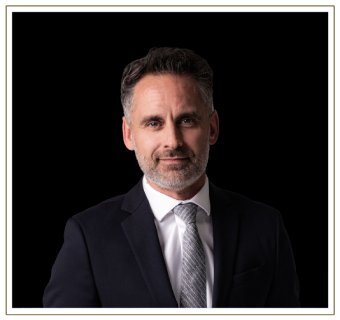
Dr. Scott Leune
Scott Leune, known as The Dental CEO, is one of the most respected voices in dental practice management. From his seminar room alone, he has helped launch over 2,000 dental startups and supported more than 20,000 dentists across practices worldwide. Named one of the 30 Most Influential People in Dentistry, Leune delivers practical, no-fluff strategies that empower dentists to lead with confidence, scale efficiently, and achieve real personal and financial success.
Watch Episode
Read Full Transcript
Scott Leune:
If you're processing any real volume, this is one of the easiest ways to instantly increase profitability without changing anything clinically. Text CFEES to 48659 to start saving today. That's CCFEES to 48659. Start saving on credit card fees.
Setting the Stage: Technology Changes in Dentistry
Man, there's just too many changes happening in dentistry. You might think. I mean, we've got automation, we got AI, we've got virtual admin helping us. We've got new marketing stuff happening. We've got kind of software changes and X-ray changes and so many scanning. We got 3D printing. There's a lot. But what does it all end up looking like in the end? What does the practice of the future look like? Like the practice three years from now, what might that be? What in this bra new world of AI automation and enhancements and technology, where are we actually going? That is what I want to predict. I want to go step by step into why I predict that the staff makeup is going to be completely different, that we are going to use technology in a very powerful way and our dental practice is going to be a completely new animal in just a matter of years.
That's what we're going to talk about on this episode, my prediction of where we're going to be in just a few years of the practice of the future here in today's podcast of The Dental CEO.
All right, let's dive in here. We've got AI on front desk. We've got AI in radiology. We've got changes in staffing. We've got a lot of different things happening and I'm going to try to predict now knowing what I know and knowing where I've been and what I've seen, my thoughts about where we're going, and I think it's really important that we pause every now and then and try to make these predictions because maybe this is going to open us up into new ideas that we should start doing today. Maybe this is going to open up a new business model that we may want to open a new practice in a new way or design a practice differently, equip a practice differently, staff it differently. So I'm going to start right now with AI automation specifically on the front desk. Here's all the areas that already exist to automate what were tasks humans had to perform.
AI Automation on the Front Desk
And this by no means is probably the fullest, but this is just off the top of my head. In preparing for this episode, here are the things that I already know happening we're already doing. AI can already answer phones and speak to patients. AI can already schedule those patients. And when they get an appointment, AI can already automatically confirm that appointment back and forth as well as send the enrollment forms and get them filled out and do all the data entry into the software from those forms. AI and automation can even check a patient in live in person and perform automated insurance verifications if needed. AI can also handle other forms like consent forms and AI can do automated collections, automated payment and collection activities and AI can automatically create and send claims and is almost there in being able to fight and resubmit claims, manage basically the entire revenue cycle management process.
AI can also already follow up with unscheduled care, follow up with overdue appointments and follow up to reactivate patients. All of that can already be done through automation and AI. What we're getting at in the next couple of years is being able to kind of sew those diferent functions together into a user experience and a patient experience that becomes seamless, that doesn't have a lot of friction, that is just easy. Right now, all those things exist in kind of these different silos from different programs. But if we kind of look forward and say, "Okay, what happens when all of that is automated?" From the phone call to scheduling to confirming and showing up and verifying and getting consent forms and collecting and ultimately reactivating someone that's fallen out of our practice. If all of that is automated with AI, what do we need front office people to do?
Elimination of Traditional Front Office Roles
Do we need to check people in? Well, actually, no. Or maybe a different question would be, okay, if all that's automated, then what tasks are left over and do those tasks have to be done by a front office person? That's an interesting question. And so what I believe is going to happen is we're no longer going to have the need for the traditional front office person, not the traditional person. We're not going to need the scheduler. We're not going to need the insurance coordinator. We're not even going to need potentially the treatment coordinator that we will be able to present finances or deal with insurance or deal with scheduling in a way that is either going to be automated with AI or it will be able to be done differently by maybe a different person. We still need things like, is the coffee bar stocked?
AI in Radiology and Clinical Impact
Is the lobby in order? Is the restroom clean? Did we send out the lab cases? Did we receive the lab cases or receive the supplies and organize them? We're still going to have these kind of human manual tasks that have to occur, but how would we put all these Lego pieces together in a new way if AI automated all of those front office tasks? We also have, of course, AI happening already on radiology in a big way. And what that does is it doesn't just help the diagnostician, the dentist, but it actually puts the conversation into the hands of other employees as well. A hygienist can walk a patient through the AI on the x-rays. A dental assistant can walk them through. And if a dental assistant or hygienist is doing that, how does that change the way we handle the operatory tasks? How does it change how we schedule an appointment?
The New Practice Model: No Traditional Front Desk
If those tasks are handled by other people, would a dentist need another operatory and another dental assistant to see more patients because they're in the room less? Fast forward here with the domino effect of these changes and what does that actually look like? Here's what I think we're going to be at possibly as one option of a practice model. I believe that through AI automation and maybe the use of a human offsite, although I'm not convinced we'll need them, but at least through AI automation and the use of human offsite, I believe that everything that happens at the front desk will be able to be handled differently and that we actually won't need a front desk. I think we're going to need a check-in area, a check-in station for patients to check in with technology. If they haven't already checked in on their phone, then they would check in through technology at a station, but that station doesn't need a human, it doesn't need a phone, it doesn't need a traditional desk and storage.
I believe that all of these traditional front office tasks are being done through automation, through AI. We already know that that exists. And so then what's left with the front desk, if we don't need someone to check people in and we don't actually need someone to check people out in a traditional way, we could get rid of the entire front desk of a practice and reduce that down to maybe two things a check-in desk or check-in station, I should say, a check-in station and then a presentation station. So the check-in station, like we said, would be right when you walk in, patient walks in and there's an area to electronically check in and then a presentation station might be another part of the practice. It could be these beautiful, modern, kind of built-in booth areas potentially a tabletop with seating and screens. And those presentation stations can be used by anyone who's going to be presenting the case to kind of activate the treatment plan so that we put it into the schedule and we start doing it to present the case.
Reimagining Treatment Coordination
Well, traditionally, who presented the case? That was a treatment coordinator, but why does it have to be a treatment coordinator in the future? In the past, it was a treatment coordinator because we're talking in depth about insurance and we're having to manage payment plans by hand and we're having to schedule things by hand. And a lot of times we're answering a bunch of questions that are involving the process of sending and resubmitting claims and collecting. And that person ends up in the old way of doing everything by hand, that person ends up being someone with a lot of hands-on experience with insurance and billing. But in the new way when we don't even have to verify anymore because AI has given us a real-time benefits breakdown from the insurance company, there's no question about what is going to be paid by insurance or not. It becomes an automatic thing that's spit out on a sheet of paper or spit out into a tablet.
The person presenting finances doesn't need all of that insurance knowledge anymore. The person who's presenting finances needs to understand just the process of presenting the clinical treatment plan, what does the patient need and how much is that going to cost and how can they pay and schedule? It's a logistical conversation about paying and scheduling. Who can have a logistical conversation about paying and scheduling if trained for that? Anyone including a dental assistant. And so let's look at the facility then. If I'm going to have potentially dental assistants presenting a very simplified presentation of scheduling and paying, then I could do that in a kind of presentation little booth or nook or area of table and chairs and monitors. And I would want multiple of those little areas because at any given time, I might have several patients from their own dental assistant needing a little two-minute presentation.
Clinical-Only Staffing Model
So I would have kind of multiple areas of these workstations, these presentation stations. And so we could use those stations to present finances, but we could also use that station as an employee to sit down and do something on any computer. They're a station that has multiple purposes. So I'm not going to need a whole bunch of desks in the back of the practice somewhere. We have these stations we can use from time to time. If we're going to place an order for something, for example, or we're going to send a message out to a lab, I can sit at that station and do so. So let's actually connect some more dots here because what I'm saying is pretty unusual here. I'm saying that in a way we don't need front office people, not the traditional front office people. It's possible to have the practice of the future only have clinical employees.
We're going to have a dentist to do the dentistry. We're going to have a hygienist to do the hygiene on behalf of the dentist and we're going to have dental assistants who are going to assist the dentist clinically and maybe assist the hygienist clinically, but also they will have the role of presenting the logistics of scheduling and paying. Everything else is being done through automation. I might not even consider a dental assistant. They're almost like a patient host in a way. They go to the front lobby to greet and collect the patient. They walk them to the operatory. They're with the patient during the hygienist treatment, during the dentist treatment and they with their connection and relationship with the patient are going to take that patient to the presentation station and schedule and set up payment for the dentistry the patient needs. And maybe if that's the case, patients are going to be scheduled with the host and not necessarily with the dentist.
Management and Hiring Advantages
In other words, we may structure a schedule in a way that very easily we could drop patients into a specific column based on who their host is. Who is the person that owns their relationship from A to Z, from start to finish? Isn't that a really good patient experience to have a concierge in a way be the one person you always see, you always talk to from start to finish. There's no handoff needed. There's no drop off of communications. There's no expectations that weren't properly communicated and properly met. We have a go- to person. What is this like as a manager though? If I'm going to manage this practice and instead of having a scheduler and an insurance coordinator and a treatment coordinator and a dental assistant, everyone's just a dental assistant. Oh my gosh, that's so much easier to hire for. That's so much easier to find.
That's so much easier to train for. When someone's sick, it's so much easier to deal with because we all basically as dental assistants, we all have the same role. We all have the same abilities. We all have the same kind of functions in the practice. So if I lose Mary, I hire another host or another dental assistant. In the old way, Mary could have been an insurance coordinator. Now I got to find someone else that can coordinate insurance, a very specific role that costs more to hire for. It costs more to find, it takes longer to find. But in a model where everyone has the same kind of role, training is systemized, it's easier. It's not as expensive to find people or to train them or to employ them in this model and the patient experience is likely going to be a lot better. So let's kind of step out a little bit and look at this thing.
Six-Operatory Practice Staffing Example
Maybe I have a six operatory practice hypothetically and I'll have two to three columns that are hygiene, which means I could have two hygienists cover three columns or I could have three hygienists cover three columns. I might run some assisted hygiene or maybe it's unassisted, but two to three columns could be hygiene. Two or three columns could be restorative, but if I'm going to do three columns restorative, I probably want two that are truly restorative and one that is going to be the column where I am putting in the consultations as needed. So what does a staffing look like? Three columns of hygiene with two hygienists and one dental assistant. And that dental assistant is going to be a host for those patients coming in potentially. And then I've got two restorative columns. Each column has a dental assistant host. And then I've got a third column that is not going to be used very often, but that's where I'm going to be putting in these kind of new patient consults or these like surgical consults or Invisalign consults.
Hiring Philosophy for the Future
That third column will also have its own dental assistant or host that is probably not going to be very busy. That might be my lead host, my lead dental assistant, the person that instead of calling them an office manager, they're just the lead. There's not so much to manage at the office anymore, but someone has to make sure we're auditing the facility and everything is clean and that we're managing the staff schedules, right? Someone has to still help the CEO manage the business side. It's just the business side got way more simple when AI took care of it through an automation. So I might make that person my lead and they're going to spend a lot of their time leading the business and they're going to spend some of their time hosting the patient that needs the higher end consultation. If that's my setup in this brave new world, then I am in the business as a dentist owner of finding and retaining hygienists and dental assistants.
And I need good people with a good work ethic, good personality that I don't mind spending the next 20 years working alongside. I don't necessarily need super experienced people because I can teach them how to be a dental assistant and I can have them get trained on the simple logistical process of scheduling treatment and getting payments set up. Everything else is going to be basically driven and run and managed by AI. Almost like in a car we don't have to turn every thing. We don't have to manually turn this and crank that and move this and move that. It's automatically done by the machine of the car. We just need to make sure that some things we're driving manually, like we're putting our blinker on manually, we're stepping on the gas manually, we're steering manually. And in a way, a lot of the dental practice can be automated through now the machine of AI and software.
The Personal Assistant Addition
We just need to make sure we're steering the machine and a lot of the steering of that machine is the clinical side of dentistry and well as a few of the business principles. We need to hit the blinker is like, well, we got to be able to schedule a patient, right? We need to step on the gas. It's like, yeah, we got to set up payment processes. We're going to do that with people with real conversations, but we definitely, definitely don't have to answer the phone, schedule all the patients, confirm all the appointments, check them in, get them forms filled out person to person and consent forms or collect from them person to person, submit claims, resubmit claims, follow up, reactivate all that stuff can be done by the machine. And if that's done by the machine, I now have a team that looks different.
And that team, by the way, is patient centered and clinically centered. Those are the people I have a good time managing traditionally. In the traditional sense of running a dental practice, it's the business side of the practice that can be difficult to manage. It's the clinical side that clinicians have an easier time managing and I have basically standardized most of the roles in the practice to be the dental assistant role that is going to host the patient and that patient's going to get a great experience. Now I want to kind of take this a step further because what we've now described is a simplification of hiring and of managing a practice. We've got a consolidation of the tasks we have to do with a human because everything else to be done with technology. What if we have these dental assistants and this hygienist and what if I hired even one extra, one extra dental assistant?
But their main role is to be my life assistant. You might call them a personal assistant today, but they're going to help me personally in my life. They're going to help me personally in my business. They're one of my dental assistants that have been promoted to be my personal assistant. They are going to help do tasks for my company that I either don't want to do or I don't want to make the time to do or I'm not good at doing. They're going to run this report and run this audit. They're going to set up these meetings. They're going to sign me up for this CE. They're going to calculate the bonus plan or whatnot. They're going to create goals for the office. They're going to set up an implementation plan every month. They're going to do the tasks the CEO would normally do. I'm going to delegate those to this assistant, this personal assistant.
But I'm also going to delegate life tasks. I need them to pick up my kids. I need them to drop off the dry cleaning here. I've got one of my cars that needs to be picked up from the shop. They're going to handle those live tasks. This person is going to have a really wonderful job because it's going to be a job of flexibility, a job of maybe working from home some. It's going to be a job where if their kid is sick, they can be home with their kid while they perform these tasks from remotely. And I get someone that is taking work off of my plate. I can already do this in today's environment. This is exactly how a lot of the people I coach implement a personal assistant. They take an existing employee from the practice and promote them in pay and promote them in flexibility to become a personal assistant of theirs and they are going to personally assist them in life and they're going to personally assist them in the business.
Cost-Benefit Analysis of Personal Assistant
But here's the other benefit, because they came from the business, if I have someone out sick or I had to let someone go or someone quit, my personal assistant jumps right back into the practice and fills that empty seat so that we never were missing someone. They sit in that empty seat until we can hire the next person. However, in today's practice model, that seat might be a dental assistant seat or it might be the scheduler seat or it might be the insurance coordinator seat or it might be the treatment coordinator's seat. And if I throw my personal assistant who was trained as a dental assistant into the missing insurance coordinator seat, they may not do a great job because they've never coordinated insurance before. That's a harder way to try to kind of fill the gap. But in this brave new world, in this model, this hypothetical model I'm describing on this episode, we don't have that many types of seats.
We got a dentist, a hygienist, and dental assistant. If I have one of my five dental assistants that are sick, my personal assistant can hop in that seat. They're trained as a dental assistant and we haven't skipped a B. If I have a hygienist that's sick, if I'm running unassisted hygiene as an example, one of my hygienist is sick, no problem. I'll take that schedule, move everyone down a half an hour and my personal assistant will become the other hygienist assistant and we'll run assisted hygiene that day. In other words, we could run unassisted hygiene on a normal day, but when we're missing a hygienist, we transition to assisted hygiene for that day using the other hygienist that isn't sick and using my personal assistant. In other words, if I set it up thoughtfully, I'm never shorthanded when someone's out because my personal assistant is going to fill the gap in the clinic when someone is out.
Facility Design Implications
Is it a good use of money to have a personal assistant? I mean, I think it is. I mean, I passionately think it is, but if we set it up to where they fill in the gaps clinically, then we have saved the loss of being shorthanded. We have saved the cost of a temp. Part of the cost of this personal assistant is justified by the value and the cost savings we get if they can hop in and fill the clinical gap of missing someone. So if I have to pay them, I'm just going to make something up right now. Let's say I have to pay them easy math, 50 grand a year. Maybe 10 or 20 grand of that I'm getting back just because they're covering people when they're sick. And so really they're costing me the rest, 30 grand. And is it worth 30 grand?
Well, 30 grand to a lot of you dentists is, of course, it's a fraction of what you make. You can make a lot more if you give yourself more clinical hours and have this person do business tasks or I don't really like that. I'm not going to try to make more by working even more hours. I just want this person to help me get the life I intended to have. A life that says I've got flexibility to be with my family, I've got time to work out, I've got time to do things that make me happy, myself, selfish things that make me happy. I've got time to handle crisis. I've got time to be the husband or the friend or the son or the father that I want to be. And sometimes we own a practice and the practice is stealing all that time away from us and we justify it.
The Complete Automated System
We stay late to do this or do that, or we never get around to implementing something we need to implement. Just things get in the way and we lose time. If I can have a personal assistant give me that time so we are implementing things so I don't have to stay late. I now get that time if I can invest that time into being the person I want to be and having the life I want to have. And I think that's incredibly important. That's worth so much more than 30 grand a year. So this episode's kind of a weird, interesting episode, I guess, but I'm kind of talking about multiple things here. I'm talking about the fact that number one, we could really use a personal assistant. And number two, we might be able to have a model of practicing dentistry where we only have hygienists and dental assistants.
Industry Impact and Accessibility
And if that's the case, our personal assistant brings a lot of value because we've simplified the hiring and management and running of practice to this dental assistant position and they're acting like a host and this host can be scheduled with their own patient base so the patients get consistency and all of that is made possible in part due to the dominoes that are falling today with AI and automation. And if this plays out as I'm predicting, then we might design the practice in a different way. We don't need all that space for all that front desk work and all that front desk chaos and all that front desk storage, all that front desk noise, all the front desk people. We might run a practice where Mary, instead of being an insurance coordinator, is going to be a patient host that helps clinically and sets up payment and scheduling and now my facility looks different.
Patient Benefits and Conclusion
I've got a check-in area or station and I've got a few presentation stations that are going to be designed probably with chairs or booths facing each other with a table in between and some screens and those going to be multi-use stations that at 8:30, one of my hosts is presenting a case financially to Mr. Jones, but that only takes a few minutes. At 8:38, a different dental assistant sat in that station to kind of place an order for something we need. So this becomes a very, I think, interesting way of looking at running the practice. We have automated, we've simplified, we've standardized the team, we've changed the facility and we've built in kind of the fallback of the personal assistant filling in when we're sick, all being run by a lead who's probably a dental assistant who has a light column and can spend the rest of the time making sure that this machine is well oiled and running properly.
That might be what dentistry looks like when phones are automatically done, scheduling's done, confirmations, forms, check-in, verification, collection processes, claims, resubmission to claims, follow up a patient, reactivation. And all that's done with AI and automation we need to become the pilot of this machine, the driver of this car. We no longer need the transmission specialist and the axle specialist and the exhaust specialist. We just need people that can drive it well, that fit in well with our culture and that are going to take care of our patients, the passengers. That might be what dentistry is going to look like. I hope so. I think that is a prettier picture than where we're at today. And I think the profit margin of that picture is going to be stronger as well. The barrier to entry to run a practice is going to get lower and so maybe that will cause more dentists and earlier in their career to be owners when it's easier to run a practice.
When the difference of being an associate and being an owner isn't that much in an associate I'm managing a dental assistant and I'm focused clinically and as this new kind of way of doing a practice, this practice of future as an owner, I'm still managing clinical things. I'm still managing mainly clinical people. When that looks more and more similar Similar, ownership becomes easier for the profession to have dentists go into because we want control of our schedule. We want the profits from our work. We want to choose the people we work with and the facility we work in. We want our experience and our career to be an accurate reflection of what we stand for and we need that to support our family financially in the best way possible. I think this new way of running a practice that I'm hypothetically talking about here, this hypothetical practice is going to be easier to start, easier to manage and people will do it at an earlier age and at a higher rate and the patients benefit.
The patients are going to benefit from these types of changes for sure. All right. I know this is kind of a weird, interesting episode, but I think every now and then we need to have an exercise where we try to predict the future. We talk about the trends and we try to see where they might be taking us so that we can look at our own situation in a new light. I hope that's what happened. Thank you so much for tuning into this episode and of course all of our episodes are completely different from each other. I hope you've subscribed. I hope that we are one of the drips of content into your feed every week as you drive to work or work out. I do really appreciate you guys listening in and supporting us and I will see you next time. My name's Scott Leune and this was the Dental CEO Podcast.
SUBSCRIBE TODAY
Subscribe now and receive a 25% discount code for Scott Leune’s upcoming events. Plus, get podcast episode alerts and exclusive subscriber perks.